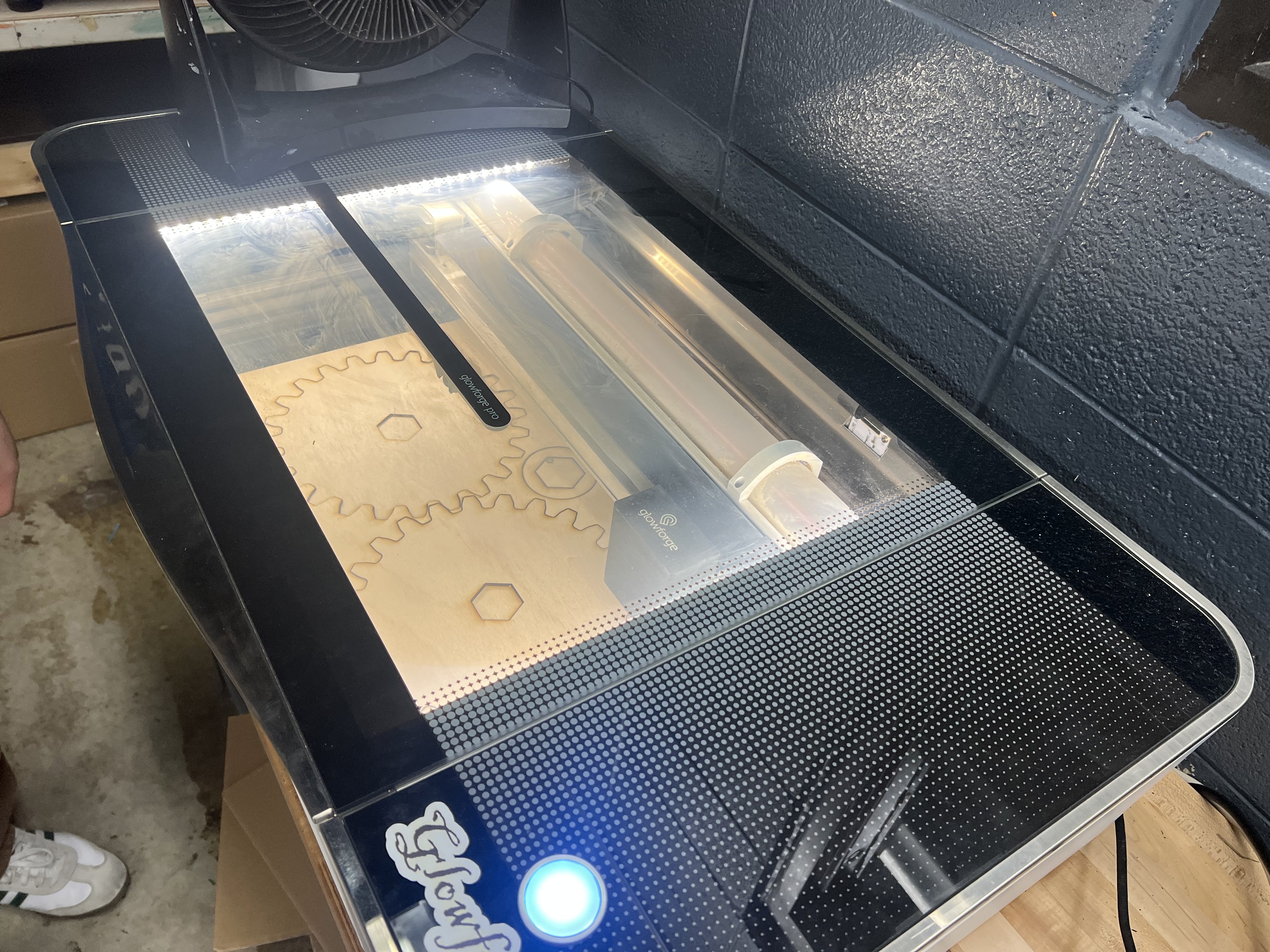
My Internship class is housed within an engineering classroom... and I love it.
When I walk into my internship class, the machines are running. The 3D printers are layering filament. The CNC machine is cutting with precision. Students are locked into their design modules, adjusting dimensions, testing tolerances, solving for material constraints. It looks impressive on the surface. It looks technical. It looks advanced.
But that is not what I am really there for.
I always stop and ask them one simple question. What are you building?
They usually start with the technical explanation. They tell me about the file they designed, the material they selected, the way they calibrated the machine. They explain the print time, the measurements, the adjustments they made in the software. They absolutely have the technical skills down. They know how to run the equipment. They know how to construct. They know how to engineer.
Then I ask the question that changes everything. What is the story behind it?
How did you come up with the idea? What problem were you trying to solve? What did not work the first time? What changes did you have to make? How quickly could you replicate it if someone needed ten more? Who is this actually for? How did your team make decisions along the way?
That is when the energy shifts.
They lean back. They think harder. And then the stories start flowing.
They talk about the first prototype that completely failed and why. They describe the disagreement between teammates and how they worked through it. They explain how customer feedback forced them to redesign a key feature. They reflect on the moment they realized their measurements were slightly off and how that small mistake taught them something bigger about precision and planning.
And here is the part that excites me every single time.
They start describing communication, problem solving, collaboration, resilience, adaptability, leadership. They do it naturally. They do it without being prompted to list skills. They are not reciting a rubric. They are telling a story.
That story is the durable skill development.
The machine is impressive. The finished product is impressive. But the narrative behind it is what expands their network, what unlocks internship opportunities, what opens job doors. Employers are not only looking for someone who can run a machine. They are looking for someone who can think, adapt, communicate, and grow under pressure.
When students can articulate how they navigated uncertainty, how they handled friction on a team, how they iterated when things did not work, they move from being a student who completed a project to a young professional who created value.
I always encourage them to hold on to that narrative. Refine it. Practice it. Own it. The ability to translate experience into a compelling story is often the differentiator in an interview room. It is the difference between saying I took an engineering class and saying let me tell you about the time our design failed three times and what we did to fix it.
Experiential learning is not just about doing. It is about reflecting. It is about connecting the dots. It is about understanding what you built and who you became in the process.
In that engineering lab, surrounded by printers and machines, what we are really constructing is not just prototypes. We are building identity. We are engineering confidence. We are helping students see that they are more than technical operators. They are thinkers. They are collaborators. They are problem solvers.
And when they can tell that story with clarity and confidence, that is when education becomes a launchpad instead of a requirement.

Peter Hostrawser
Creator of Disrupt Education
My value is to help you show your value. #Blogger | #KeynoteSpeaker | #Teacher | #Designthinker | #disrupteducation